

Preface
Today, software can find the right prospect, research them, write the perfect message, and send it. The moment the message needs to be received, the workflow breaks. Nobody reads it. It is every digital channel at once: SEO answers are written by AI and read by AI, and a Google click now costs $5.42, up 16% in a single year.source 88WARC via Marketing Dive (global 2025 spend); Meta Q4/FY2025 results ($196.2B ad revenue); Alphabet FY2025 earnings; WordStream/LocaliQ 2025 benchmarks (CPC $5.42, +16%, 87% of industries, CPL $70.11).
Within the next decade, I believe the highest converting ad channel will be physical: real objects, chosen by intelligence, delivered by hand or by network, priced and measured like media. The infrastructure to run that channel does not exist yet. We are building it.
A century ago, an art dealer named Joseph Duveen sold the hardest product in the world to the least reachable men in it, by pairing deep research with physical moments they could not ignore. His method never scaled past his own payroll. AI just made it infrastructure: the intelligence he bought with bribes, a model now reads from the public internet.
The problem
The average sales rep now sends 344 cold emails to book one meeting.source 11Gong, analysis of 28M+ cold emails, July 2025. Across 7.5 million cold emails sent in 2025, the measured reply rate was 0.45%, one booked appointment per 6,275 emails, and the rate fell 20% within that single year.source 22Belkins cold email study, 7.53M emails sent 2025.
The cause is volume without cost. Gartner predicted that by 2025, 30% of outbound messages from large organizations would be synthetically generated, up from under 2% in 2022.source 33Gartner prediction, 2023. It happened. The average worker now receives 117 emails a day and is interrupted every two minutes.source 44Microsoft Work Trend Index, June 2025. Gmail answered with authentication rules that erased 265 billion unauthenticated emails in one year.source 55Google bulk sender rules, Feb 2024, and Google reported effects.
The receiving side is automating too. Gartner expects AI agents to intermediate $15 trillion of B2B purchasing by 2028.source 66Gartner via Digital Commerce 360, Nov 2025. And conversation itself is now computable: in February 2025, four Columbia students won their hackathon with Social Stockfish, an engine that runs Monte Carlo simulations over hundreds of possible futures of a text conversation and picks the message most likely to get a yes.source 77Social Stockfish, Columbia DevFest 2025 first place. When both sides run engines, the words stop carrying information. A message that costs nothing to send means nothing to receive.
Meanwhile, the money keeps crowding the same auctions. Global ad spend surpassed $1.1 trillion in 2025, and Meta and Google alone accounted for roughly $490B of it. Google CPCs rose 16% in a single year, across 87% of industries, to an average $5.42 per click and $70 per lead.source 88WARC via Marketing Dive (global 2025 spend); Meta Q4/FY2025 results ($196.2B ad revenue); Alphabet FY2025 earnings; WordStream/LocaliQ 2025 benchmarks (CPC $5.42, +16%, 87% of industries, CPL $70.11). Everyone is bidding on the same pixels for the same eyeballs with the same models.
The physical exception
The physical channel never stopped working. It just stopped being used. Direct mail still gets a 10 to 15% response, where email gets about one.source 99ANA Response Rate Report 2023: direct mail 15.6% house list, 10.8% prospect list; email around 1%. Neuroscience commissioned by the US Postal Service found that physical objects trigger the ventral striatum, the brain’s valuation center, and are remembered better than anything on a screen.source 1010USPS OIG and Temple University, “Enhancing the Value of Mail: The Human Response,” 2015. In the UK, 77% of physical mail is read or looked at, an eight-year high. A physical item holds attention for 133 seconds and lives in the home for seven days.source 1111JICMAIL Q4 2024.
In April 2024, Antimetal spent about $15,000 sending 1,000 pizzas to prospects in New York and San Francisco. Roughly 75 of the recipient companies became customers, worth over $1 million in annualized revenue. “The ROI is insane,” in the CEO’s words.source 1212CNBC Make It, June 2024.
The mechanism is signaling. A message that costs nothing signals nothing. An object that took research, craft, and a human hand to deliver is proof of intent that cannot be faked. Effort became the last honest signal, and the physical world is where effort shows.
Why it is not solved yet
Corporate gifting should have solved this. It is a $250B+ US market,source 1313Coresight Research x GiftNow, 2022: US corporate gifting $258B in 2022, projected $312B by 2025. Includes gift cards and employee gifting; the sending platform segment is far smaller. and its platform leader, Sendoso, raised $152M, including a $100M SoftBank round.source 1414TechCrunch, Sept 2021. Then reality: four rounds of layoffs by late 2023, headcount from roughly 600 to roughly 250, and a co-CEO who publicly calls the company a turnaround.source 1515Business Post (June 2022 layoffs); Business Insider (fourth round, Oct 2023); Executive Brand podcast with co-CEO Abhay Rajaram, April 2026. It has spent the last two years buying the category instead of growing it: Alyce in 2024, Postal in 2025, Merch.co in 2026.source 1616MarTech (Alyce, 2024); Sendoso (Postal, May 2025); ASI Central (Merch.co, May 2026).
The failure is structural. Sendoso was founded in 2016, before AI. Personalization per person could not scale then, so they built what could: warehouses and a shared catalog. But when thousands of sellers pick from the same catalog, every CMO in San Francisco receives the same five pairs of AirPods with five different logos. Their own reviewers say it plainly: limited options, outdated items.source 1717G2 Sendoso reviews. An estimated 40% of corporate gifts end up in landfills.source 1818ING estimate via Employee Benefit News. The catalog model manufactures the exact sameness that makes physical mail ignorable, and a recommendation layer on top of a static catalog cannot fix it, because the constraint is the catalog.
Their own commissioned research proves the mechanism works: gifting lifted meeting acceptance rates from 58% to as high as 93%.source 1919Forrester Total Economic Impact of Sendoso, 2021. The channel converts. The object is dead.
The next wave is already visible. Wildcard, out of Santa Monica, sells 1 of 1 physical campaigns to enterprise ABM teams, claims 50% response rates and $250M+ in pipeline built, and says revenue grew 5x in the last twelve months.source 2020Wildcard site and hiring pages, fetched July 2026. Its public logo wall includes Sendoso itself: the incumbent buys its outbound from the category forming underneath it. But Wildcard is a service that ships merchandise. Nobody owns the machine: research, purchasing, delivery, and a learning loop in one system.
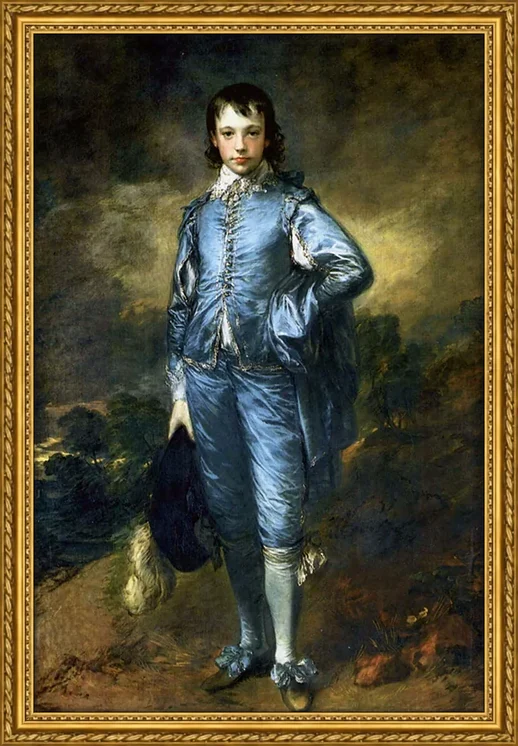
Joseph Duveen
Thomas GainsboroughThe Blue Boy, c. 1770Oil on canvasThe Huntington, San Marino. Sold by Duveen to Henry E. Huntington, 1921
Between 1908 and 1939, Joseph Duveen sold Old Master paintings to the least reachable men in America. Mellon. Frick. Huntington. Kress. When he sold the Blue Boy to Huntington in 1921, the price, $728,800, was the highest ever paid for any painting.source 2727The Huntington; ARTnews: Duveen sold Gainsborough’s Blue Boy to Henry Huntington in 1921 for $728,800, then the record price for any painting. Nearly every great American collection of the era was built through him.
His method was research. He paid the butlers, valets, chauffeurs, and ship stewards of both buyers and owners for their moods, finances, travel, and rivals; his biographer records one butler quietly being paid $100,000 over the years.source 2121Meryle Secrest, “Duveen: A Life in Art”; S.N. Behrman, “Duveen,” 1952.
Mellon was followed for years. Duveen literally went through his trash can for clues.
The legend: Duveen once rented a suite directly below Mellon’s, paid for the signal that Mellon had rung for the lift, and met the most elusive buyer alive by chance, in an elevator.source 2222Behrman, “Duveen,” 1952. Mellon’s biographer Cannadine doubts the scene’s details; the years long cultivation is documented. Then, in 1936 he leased the apartment directly below Mellon’s in Washington, hung it with a hand picked collection, and let the 81-year-old live alone with the paintings. Mellon bought the lot for $21 million, the largest art transaction in history back then.
Duveen was not selling paintings. He was selling the feeling of being perfectly known. The strategy never scaled, because it lived in one man’s head. That constraint is the one that just disappeared: the informant network is now a model reading the public internet, and the judgment is a system that learns from every delivery.
Mellon was followed by one dealer. Today everyone is Mellon: followed by every platform, every pixel, every retargeting loop, and I’m getting numb to all of it. Being tracked has become free, so it reads as an insult. Being understood stays rare, so it reads as a gift. That is the thesis I’m building my company on. The dossier that cost Duveen a butler’s retainer costs us about three cents.
The 1,000 cakes: the market is real
One of our earliest customers asked for 1,000 cakes across 50 cities before we had tech or a baker network. We found 50 bakeries. Then the customer swapped all 50 cities, and out of time, we took a shortcut: fly the cakes. The plane’s cooling was off. Fifty arrived ruined, and they were the fifty addressed to the campaign’s most influential recipients. The campaign still produced about 150 meetings. The customer was right to be furious, and they left.
Then the part that matters. The year before us, they had bought 1,000 pizzas: 350 meetings (when we originally met them, they described organizing this as a nightmare). But even after we fucked them over, they still bought 2,000 more cakes for a new campaign, without us. Our own mistake could not kill their belief in the channel. They fired the vendor and kept the channel. Physical outbound is already a repeat line item in real budgets. What does not exist is the machine that runs it reliably.
What we did after: two months building bakery partnerships in every zone we serve and a delivery flow with no improvisation left in it. And one decision that shapes everything below: cake is the spearhead, the thing that goes viral over and over, but the part that scales has to be objects an agent can buy and ship with the reliability of e-commerce. That is where agentic commerce enters.
What we are building
The research engine · The fulfillment network · The learning loop
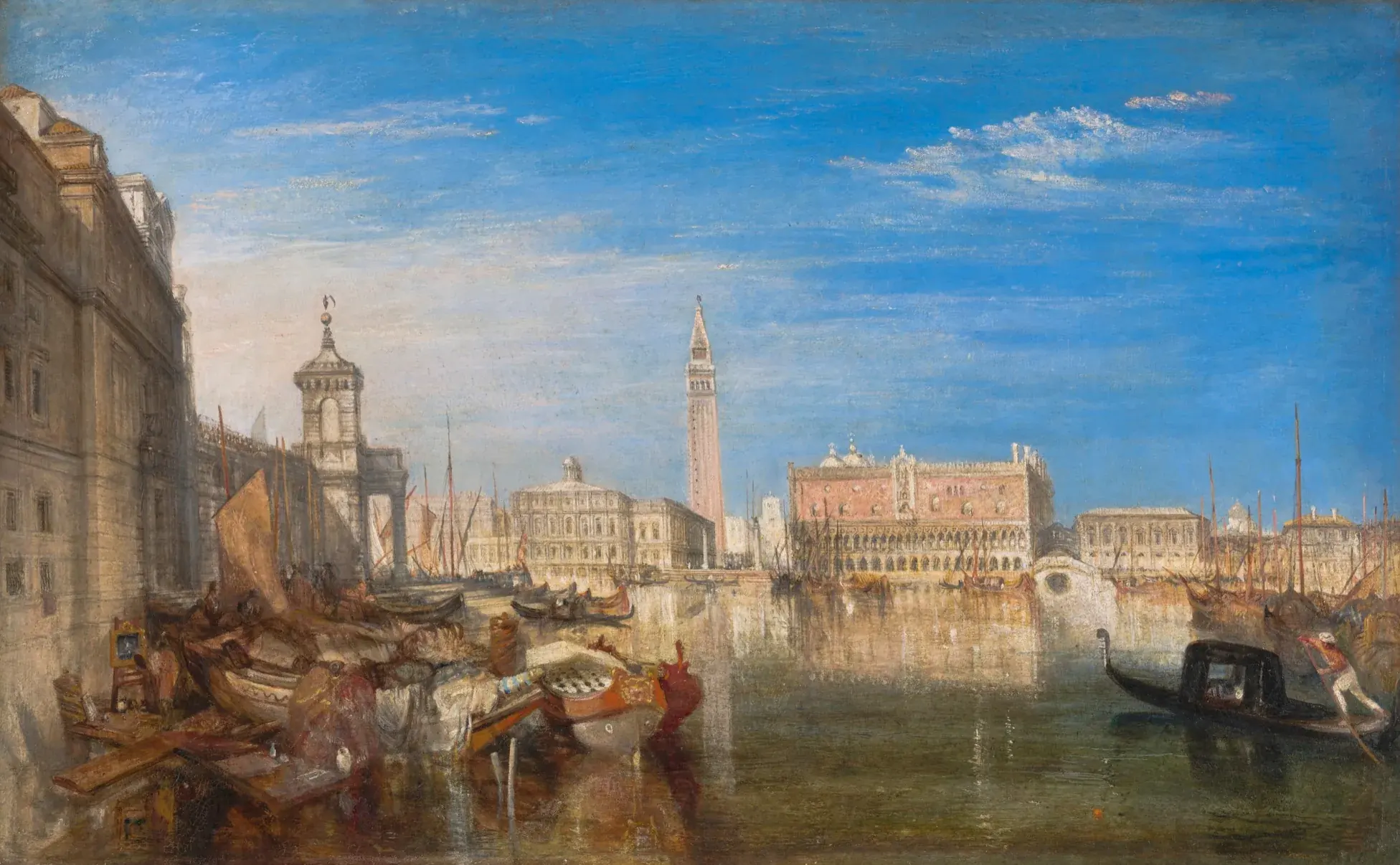
J. M. W. Turner, Venice (detail)
The research engine
Given a person and a goal, read everything public they have ever put into the world: career arcs, essays, talks, tweets, taste. Then compute the physical action with the highest likelihood of converting them. These are written rules learned delivery by delivery: a $15 box of Taytos from home beats a $200 gift basket, heritage is sent as snacks, never as ceremonial objects, and a signed item from someone’s named hero outranks everything else. We acquired send.gift’s prospect research methodology and hardened it across our own deliveries. It is Social Stockfish pointed at the physical world: simulate the moves, pick the highest expected value action. Except our move is one the other side’s AI cannot filter, forward, or fake.
The fulfillment network
Bakers, makers, couriers, and human hands, run by software. Hand delivery is live in 44 cities across 9 countries today, from New York to Stockholm to Sydney, and growing; coverage is public at daymaker.com/zones. Hand delivery for the moments that justify it, agentic purchasing and shipping for scale. This is the part software companies do not want to build, and it is why the winner here will be hard to displace.
The learning loop
Every delivery returns a result: the photo, the reply, the meeting, the revenue. The engine learns what converts whom, per industry, per seniority, per city, and at what price. A static catalog cannot learn. This machine cannot stop learning.
Agentic commerce
The gift that converts a specific person is usually not something we make. It already exists, somewhere on the internet: a graded Pokémon card of a flower Pokémon for the founder of an orchid company, a signed lithograph by the artist someone wrote 2,000 words about, the snack from the hometown someone left behind. The engine’s job is to find it, buy it, and route it. That is agentic commerce.
- Reliability
- a shipped good survives the network in a way a perishable cannot; the failure mode that cost us our earliest customer does not exist for it.
- Catalog
- Sendoso’s constraint is a warehouse; ours is anything for sale on the internet, which makes the sameness that killed corporate gifting structurally impossible, because the engine can choose an object that exists once.
- Data
- every purchase is a transaction with an outcome attached. Which object, for which person, at what price, produced which reply. We are training on the only dataset that matters: results in the physical world.
OpenAI and Stripe shipped the Agentic Commerce Protocol in late 2025.source 2525Stripe newsroom, Sept 2025; OpenAI, “Buy it in ChatGPT.” In January 2026, Shopify and Google launched the Universal Commerce Protocol, and by spring its council included Meta, Amazon, Salesforce, Stripe, and Target.source 2828Ilya Grigorik, Shopify distinguished engineer, on UCP and the Global Catalog. Shopify.dev livestream, July 23, 2026; Shopify Global Catalog docs. Then Shopify opened the Global Catalog: two years and over $100 million spent normalizing every merchant’s inventory into one index, released as a free public API, because, as its architect put it, “the world should not collapse on three surfaces on which you start a purchase.”source 2828Ilya Grigorik, Shopify distinguished engineer, on UCP and the Global Catalog. Shopify.dev livestream, July 23, 2026; Shopify Global Catalog docs. An agent that can search every product on the internet and buy from any merchant is exactly the catalog our engine chooses from. Sendoso spent a decade filling warehouses. The industry just handed us an unlimited one, for free.
Most agentic commerce is an agent buying what you already want. Ours is an agent buying what will make someone else act.
The physical adsmanager
Meta does not sell you a tool. It owns the audience, the auction, and the measurement, so $196B a year of budget lives there by default.source 88WARC via Marketing Dive (global 2025 spend); Meta Q4/FY2025 results ($196.2B ad revenue); Alphabet FY2025 earnings; WordStream/LocaliQ 2025 benchmarks (CPC $5.42, +16%, 87% of industries, CPL $70.11). Nobody at Meta sends your ad. You set a budget, a target, and an outcome, and the machine spends.
You connect your CRM. You define an audience the way you would in Meta’s Ads Manager: role, company size, deal stage, trigger events. You define an outcome: meetings booked, deals reopened, customers kept. And you upload spend, $500 a day, every day, like any other channel. Overnight, the machine researches everyone who entered the audience, chooses each object, buys it or bakes it, routes it through the network, and reports cost per meeting in the morning. Nobody sends a gift. Money goes in, meetings come out, and tomorrow’s spend reallocates toward whatever converted today.
Ads get more expensive every year. That is what an auction is: every new bidder raises the price of the same attention. CPCs rose 16% last year alone.source 88WARC via Marketing Dive (global 2025 spend); Meta Q4/FY2025 results ($196.2B ad revenue); Alphabet FY2025 earnings; WordStream/LocaliQ 2025 benchmarks (CPC $5.42, +16%, 87% of industries, CPL $70.11).
Our cost moves the other way, because the engine learns. The day a $2 letter converts one audience as well as a $100 cake, it ships letters from tomorrow, for every customer on the platform.
And we start from parity: at a 30% meeting rate, a booked meeting costs about three cakes. A $70 search lead is a form fill.source 88WARC via Marketing Dive (global 2025 spend); Meta Q4/FY2025 results ($196.2B ad revenue); Alphabet FY2025 earnings; WordStream/LocaliQ 2025 benchmarks (CPC $5.42, +16%, 87% of industries, CPL $70.11).
The part I’m most excited about is that these budgets already exist: our partner marketer.com runs daily ad spend for over 2,000 brands (soon to be $1B a year) through its platform, money that flows to Meta and Google today. When the curves cross, reallocating it into the physical channel is a toggle, not a sales cycle.
Three doors into the same machine: self serve credits for founders (coldcaking for $99), managed campaigns for GTM teams (a budget and a cost per meeting), and enterprise, where we run the physical channel for you, end to end. Above that sits the Duveen tier: when the deal is worth a billion, the moment can be worth a million.
Evidence
The only real proof of a $100B company is a $100B market cap. Until then, proxies. Ours:
About 30% of our campaigns produce a booked meeting. One client sent 7 cakes to a16z, Sequoia, Lightspeed, Better Tomorrow Ventures, and Index, and got five meetings.source 2626Sifted, Feb 2026. Buyers now arrive inbound with budgets already allocated, asking for 250 to 300 unit campaigns.
Me to Nathan
Hey, didn’t notice your email.
Sending the bakery an email rn to negotiate pricing. Will update you if I get a discount, in the meantime - estimate 120*275= $33 000
(Assuming a $10 disc)Nathan to Me
In the online portal I couldn’t see if we could upload a design for the box. Is that an option? Can we customize the design of the cake/card/box per customer (saw the one one of flex x spacer robotics)
Me to Nathan
Yo. I got you on 110 per cake 😎
Nathan to Me
Great news, will try to wrap up the prep on our end on Monday.
In fact, we haven’t made a single effort in marketing since March 2026, yet we’ve had about $20-30k in revenue every month.
And the strongest evidence we have is the campaign we failed. A customer we lost to our own mistake had bought 1,000 pizzas before us and bought 2,000 cakes after us. The budget exists. The repeat behavior exists. The machine is what is missing.
Going forward, we'll be running campaigns like this in-house. We just sucesfully ran with donuts and had no issues in 20 different location
Do we want to maybe use Tania’s boxes for another 1,000? 🙂
Risks
Two risks hold real merit.
Saturation
If physical outbound works, it gets copied, and cake becomes the new branded AirPods. This is real, and it is why the company is an engine and not a catalog. The unit we sell is not cake; it is the unignorable moment, recomputed per person from an unlimited catalog. Saturation is fatal for whoever owns a warehouse. For whoever owns the learning loop, staying ahead of sameness is the product itself.
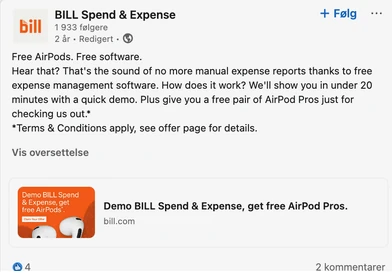
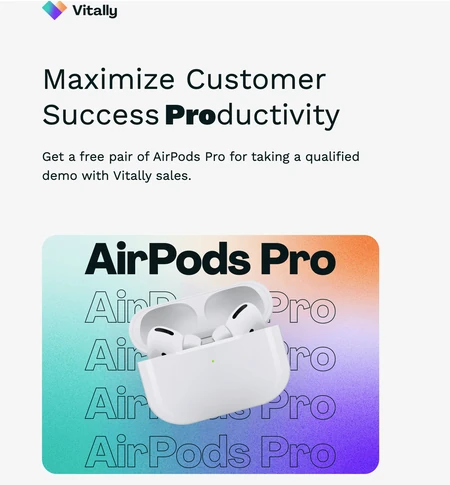
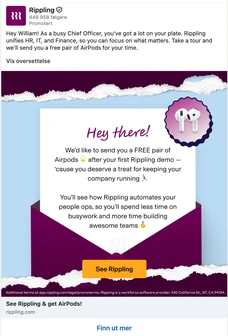
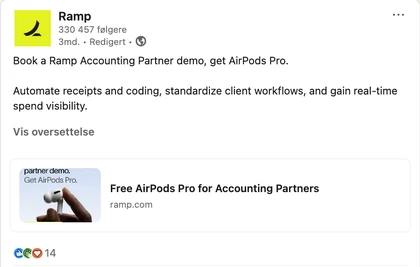

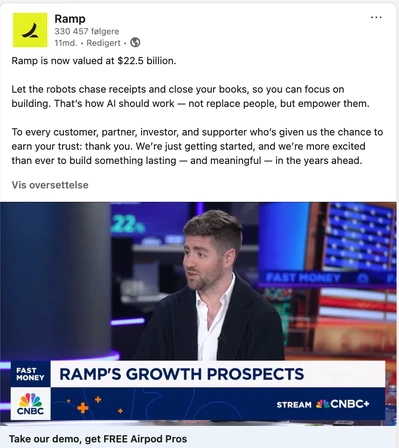

ads powered by incumbent sendoso.com
Atoms
Fulfillment fails in ways software does not: cold chains, couriers, changed target lists, planes with the cooling off. We have paid this tuition once. The answer is the network we rebuilt afterward, and moving scale volume to shipped goods with e-commerce reliability while keeping hand delivery for the moments that justify it.
A third risk, that the incumbents wake up, worries us less. Their moat is warehouses and catalog contracts, and retrofitting AI onto a static catalog does not produce novelty. It produces better ranked sameness.
Appendix
Sources
28 sources behind 31 citations. Every claim in the essay is cited.
Show all 28Fold away
- 1
Gong, analysis of 28M+ cold emails, July 2025. gong.io/blog/does-cold-email-even-work-any-mor… (opens in a new tab)
- 2
Belkins cold email study, 7.53M emails sent 2025. belkins.io/blog/cold-email-response-rates (opens in a new tab)
- 3
Gartner prediction, 2023. aws.amazon.com/blogs/industries/advertising-we… (opens in a new tab)
- 4
Microsoft Work Trend Index, June 2025. microsoft.com/en-us/worklab/work-trend-index/b… (opens in a new tab)
- 5
Google bulk sender rules, Feb 2024, and Google reported effects. blog.google/products/gmail/gmail-security-auth… (opens in a new tab) autospf.com/blog/google-yahoo-bulk-sender-mand… (opens in a new tab)
- 6
Gartner via Digital Commerce 360, Nov 2025. digitalcommerce360.com/2025/11/28/gartner-ai-a… (opens in a new tab)
- 7
Social Stockfish, Columbia DevFest 2025 first place. devpost.com/software/social-stockfish-yd1k23 (opens in a new tab) x.com/eddybuild/status/1889908184443175357 (opens in a new tab)
- 8
WARC via Marketing Dive (global 2025 spend); Meta Q4/FY2025 results ($196.2B ad revenue); Alphabet FY2025 earnings; WordStream/LocaliQ 2025 benchmarks (CPC $5.42, +16%, 87% of industries, CPL $70.11). marketingdive.com/news/global-ad-spend-rise-fa… (opens in a new tab) prnewswire.com/news-releases/meta-reports-four… (opens in a new tab) s206.q4cdn.com/479360582/files/doc_financials/… (opens in a new tab) searchengineland.com/google-ads-costs-keep-ris… (opens in a new tab)
- 9
ANA Response Rate Report 2023: direct mail 15.6% house list, 10.8% prospect list; email around 1%. theworldsgreatestmarketing.com/wp-content/uplo… (opens in a new tab)
- 10
USPS OIG and Temple University, “Enhancing the Value of Mail: The Human Response,” 2015. uspsoig.gov/reports/white-papers/enhancing-val… (opens in a new tab)
- 11
JICMAIL Q4 2024. jicmail.org.uk/news/news-q4-2024-results-mail-… (opens in a new tab)
- 12
CNBC Make It, June 2024. cnbc.com/2024/06/14/how-tech-startup-antimetal… (opens in a new tab)
- 13
Coresight Research x GiftNow, 2022: US corporate gifting $258B in 2022, projected $312B by 2025. Includes gift cards and employee gifting; the sending platform segment is far smaller. prnewswire.com/news-releases/rapidly-growing-c… (opens in a new tab)
- 14
TechCrunch, Sept 2021. techcrunch.com/2021/09/14/sendoso-nabs-100m-as… (opens in a new tab)
- 15
Business Post (June 2022 layoffs); Business Insider (fourth round, Oct 2023); Executive Brand podcast with co-CEO Abhay Rajaram, April 2026. businesspost.ie/tech/sendoso-slashes-14-of-glo… (opens in a new tab) executivebrand.org/p/sendoso-ceo-turning-aroun… (opens in a new tab)
- 16
MarTech (Alyce, 2024); Sendoso (Postal, May 2025); ASI Central (Merch.co, May 2026). martech.org/sendoso-acquires-alyce (opens in a new tab) sendoso.com/resources/blog/postal-by-sendoso (opens in a new tab) members.asicentral.com/news/industry-news/may-… (opens in a new tab)
- 17
G2 Sendoso reviews. g2.com/products/sendoso/reviews?qs=pros-and-cons (opens in a new tab)
- 18
ING estimate via Employee Benefit News. benefitnews.com/news/how-to-keep-sustainabilit… (opens in a new tab)
- 19
Forrester Total Economic Impact of Sendoso, 2021. info.sendoso.com/rs/757-WXD-176/images/TEI_Sen… (opens in a new tab)
- 20
Wildcard site and hiring pages, fetched July 2026. wildcardgtm.com (opens in a new tab)
- 21
Meryle Secrest, “Duveen: A Life in Art”; S.N. Behrman, “Duveen,” 1952. nybooks.com/articles/2004/10/07/the-art-of-the… (opens in a new tab)
- 22
Behrman, “Duveen,” 1952. Mellon’s biographer Cannadine doubts the scene’s details; the years long cultivation is documented. washingtonexaminer.com/magazine/282336/prophet… (opens in a new tab)
- 23
American Aristocracy (1936 apartment, $21M); National Gallery of Art history; Artsy (2,464 objects). americanaristocracy.com/houses/andrew-mellon-b… (opens in a new tab) nga.gov/about-us/our-history (opens in a new tab) artsy.net/article/artsy-editorial-enduring-leg… (opens in a new tab)
- 24
Behrman’s opening line, quoted in ARTnews. artnews.com/art-news/news/joseph-duveen-wes-an… (opens in a new tab)
- 25
Stripe newsroom, Sept 2025; OpenAI, “Buy it in ChatGPT.” stripe.com/newsroom/news/stripe-openai-instant… (opens in a new tab) openai.com/index/buy-it-in-chatgpt (opens in a new tab)
- 26
Sifted, Feb 2026. sifted.eu/articles/forget-pitch-decks-you-need… (opens in a new tab)
- 27
The Huntington; ARTnews: Duveen sold Gainsborough’s Blue Boy to Henry Huntington in 1921 for $728,800, then the record price for any painting. huntington.org/art-museum/british-and-european… (opens in a new tab) artnews.com/feature/blue-boy-painting-thomas-g… (opens in a new tab)
- 28
Ilya Grigorik, Shopify distinguished engineer, on UCP and the Global Catalog. Shopify.dev livestream, July 23, 2026; Shopify Global Catalog docs. x.com/igrigorik/status/2080377907675910492 (opens in a new tab) shopify.dev/docs/agents/catalog/global-catalog (opens in a new tab) x.com/igrigorik/status/2056417991693312370 (opens in a new tab)

